
Six decades and more later, we are now captives of our identities. Every poll is based on elaborate calculations of electability of candidates on the basis of their castes and other narrow definers. That, along with voter promiscuity, is what defines our political culture, which remains stubbornly resistant to any change, asserts Shreekant Sambrani.

BSE proposes two models for making gold trading and investment transparent

The rally in silver may continue if the global economic recovery remains on course.

Investors in international funds should have a horizon of more than five years. Not only will this help them overcome equity and currency volatility, it will also help them enjoy better tax treatment, says Sanjay Kumar Singh.

As huge declines continue, the govt can do little. Major trade destinations -- the US, UK, Europe and Japan -- are all gripped by severe recession. Other countries in Asia have experienced declines of comparable magnitude.

Gold is an excellent asset class for diversification and should be included in all long-term portfolios.

Among the Sensex firms, HCL Technologies, Tata Motors, Hindustan Unilever, NTPC, IndusInd Bank, Bajaj Finserv, Bajaj Finance and Mahindra & Mahindra were the major gainers. Bharti Airtel, Reliance Industries, ICICI Bank and Asian Paints were the laggards.
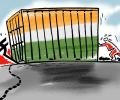
Gujarat, for the second consecutive year, has topped the Niti Aayog's Export Preparedness Index 2021 which is aimed at assessing the readiness of the states in terms of their export potential and performance. Gujarat was followed by Maharashtra, Karnataka, Tamil Nadu, Haryana, Uttar Pradesh, Madhya Pradesh, Punjab, Andhra Pradesh and Telengana, according to the government think tank's report. Union territories and states like Lakshadweep, Arunachal Pradesh, Mizoram, Ladakh and Meghalaya were placed at the bottom.

India will soon meet Iraq and the United Arab Emirates (UAE) to seek a definitive rate of discount on crude oil similar to what Russia has provided so far, sources said. Multiple officials and industry executives said Iraq, which is India's biggest oil supplier, wants to discuss the level of discounts expected by Indian refiners. India's focus on snapping up ever-increasing volumes of Russian crude oil has led to a corresponding decline in imports from the Middle East. Flows from Iraq, Saudi Arabia, and the UAE have suffered as a result.

The International Monetary Fund (IMF) warned on Tuesday that India's general government debt (comprising both central and state government debt) could exceed 100 per cent of gross domestic product (GDP) in the medium term. It also cautioned that long-term debt sustainability risks are high due to the significant investment required to meet India's climate change mitigation targets. The Indian government, however, disagreed, arguing that risks from sovereign debt are extremely limited as it is predominantly denominated in domestic currency.

Whether this remains under control in the coming months will depend on the future intensity and spread of the Russia-Ukraine war, and the effectiveness of the Indian government's response, points out A K Bhattacharya.

Given the prevailing uncertainties, investors must maintain a 10-15 per cent allocation to gold in 2023.
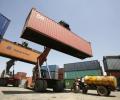
UN economists announced a likely USD 50 billion drop in the worldwide manufacturing exports in February alone as the extent of the damage to the global economy caused by the novel coronavirus (COVID-19) moved further into focus. Citing the China Manufacturing Purchasing Manager's Index (PMI), Pamela Coke-Hamilton, who heads UNCTAD's Division on International Trade and Commodities, said that it had fallen to 37.5 -- a drop of about 20 points -- the lowest reading since 2004. "This also correlates directly to exports and also implies a two per cent drop in overall exports," she said, with a resulting "ripple effect" worldwide "to the tune of a USD 50 billion fall in exports."
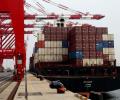
In 2016, almost two-thirds of Indian imports that appear to be most at risk for some degree of potential revenues losses are imports from just one country, China, which was by far India's largest source of imports in that year

Non-basmati white rice accounts for nearly 25-30 per cent of total rice exported from the country.

'If we play our cards right, we may even benefit from the competition between the US and China as seen from increased investment from each of these countries into India.' 'The size of our market gives us an important lever of power which we shall have to play adroitly and intelligently,' points out Ambassador Gautam Bambawale -- who served as India's envoy to China -- in the Professor V M Dandekar Memorial Lecture 2019, delivered on March 8, 2019 in Pune.

While the US-Iran conflict leading to a spike in global oil prices and trade war between the US and the EU topped the chart with 25 per cent, other major risks to the global economy include coronavirus, debt burdens causing a recess across emerging markets and Hong Kong protests causing an exodus from Asia's biggest financial centre.

From the Sensex pack, State Bank of India, Axis Bank, IndusInd Bank, Tech Mahindra, HCL Technologies, Tata Consultancy Services, Maruti Suzuki, Tata Steel and Tata Motors were the major gainers. Power Grid and HDFC Bank were the laggards from the pack.

India's widening current account deficit (CAD), driven by the massive spike in commodity prices led by crude oil, is set to put pressure on the fragile recovery, warns a brokerage report that has revised upwards its CAD forecast to $45 billion or 1.4 per cent of GDP by March. According to a report by British brokerage Barclays, the worries arise from the fact that the trade deficit has been jumping continuously since July. From an average monthly trade deficit of $12 billion till June, it has jumped to $16.8 billion in July-October, with September showing the highest-ever trade deficit on record at $22.6 billion, the report said.
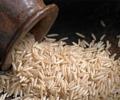
Following the outbreak, Iran has stopped Indian basmati shipments. This has led to exports already falling 18-20 per cent this fiscal year. Iran and the rest of West Asia account for the largest imports of Indian basmati, and comprise more than 30 per cent of the shipments.
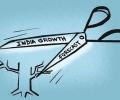
India's projected economic growth for 2022 has been downgraded by over two per cent to 4.6% by the United Nations, a decrease attributed to the ongoing war in Ukraine, with New Delhi expected to face restraints on energy access and prices, reflexes from trade sanctions, food inflation, tightening policies and financial instability, according to a UN report released on Thursday. The UN Conference on Trade and Development (UNCTAD) report downgraded its global economic growth projection for 2022 to 2.6 per cent from 3.6 per cent due to shocks from the Ukraine war and changes in macroeconomic policies that put developing countries particularly at risk. The report said while Russia will experience a deep recession this year, significant slowdowns in growth are expected in parts of Western Europe and Central, South and South-East Asia.

Equity indices staged a pullback on Tuesday after three days of declines as investors scooped up IT, metal and consumption stocks amid a largely positive trend overseas. A recovery in the rupee added to the momentum, traders said. Overcoming a wobbly start, the 30-share BSE Sensex climbed 274.12 points or 0.45 per cent to settle at 61,418.96.

'As far as contract farming is concerned, we already have a model Act and states will be encouraged to adopt them.'

Indian policymakers are almost alone, alongside the United States, in seeking a hard and multi-sectoral global decoupling from China in the expectation that it will boost their economies, observes Mihir S Sharma.

Advanced economies will be back on track by 2024, but developing economies will be 5 per cent below where they would have been otherwise, IMF's Gita Gopinath said on Wednesday. Economies worldwide have been adversely impacted by the coronavirus pandemic and are slowly coming back into the recovery path. The First Deputy Managing Director of the International Monetary Fund said the war in Ukraine has been a major setback to the global recovery.

'If you look at the order books of capital equipment companies or money deployed on the ground, there is forward movement in terms of actual investment by the private sector.'

Ahead of the Union Budget for 2023-24, Budget makers have welcomed the global consensus view that India will remain one of the bright spots in calendar year 2023. But there is some alarm over the grim global situation and how that might impact the Centre's projections and assessments for next financial year. The big global headwinds include a deep and sustained recession in the West, including India's biggest trading partners in North America and Europe, continuing volatility in commodity markets, and renewed Covid-19 fears, as lifting of strict curbs by China could potentially lead to a massive spread again.

Prime Minister Narendra Modi on Saturday announced the adoption of the New Delhi Leaders Declaration, a significant victory for India's G20 presidency that came amid increasing tensions and divergent views over the Ukraine conflict.

India's current account deficit is expected to deteriorate in the current fiscal on account of costlier imports and tepid merchandise exports, according to the Finance Ministry's monthly economic review. The review released on Thursday by the ministry also said that global headwinds would continue to pose a downside risk to growth as crude oil and edibles, which have driven inflation in India, remain major imported components in the consumption basket. For the present, it said, "their global prices have softened, as fears of recession have dampened prices somewhat. This would weaken inflationary pressures in India and rein in inflation."

Gold-silver ratio indicates more upsurge possible for the white metal.
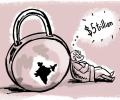
India is much better placed today to deal with future waves of the pandemic relative to the first wave, RBI deputy governor Michael Patra said.

Gold, which lost its sheen to some extent in the second half of 2021, is likely to regain the glitter in the New Year and cross the Rs 55,000-per-10-grams level amid pandemic woes, inflation worries and stronger US dollar. After a stellar run up in 2020 when the yellow metal touched a record high of Rs 56,200 on the MCX in August, the prices are near Rs 48,000 per 10 grams now. This is roughly 14 per cent lower from the all-time highs and 4 per cent lesser compared to January 2021 levels.

Dwaipayan Bose simplifies the whys and hows of revisiting your financial goals
Gold prices are struggling and are down 18 per cent from their March highs. But stock prices have fallen even more. As a result, the precious metal has begun to outperform equities - both in the domestic market and international markets. Gold prices are up 2.6 per cent in the domestic market in the current calendar year (CY22) so far, according to the World Gold Council (WGC), compared to a 1.7 per cent decline in the Sensex year-to-date (YTD).
The state-run Indian Oil Corporation on Wednesday said it plans to begin the commodity derivative transactions in a few weeks as part of its risk management strategy against the volatile international crude oil prices.

Tyre stocks have been on a tear over the past six months, with average returns exceeding 45 per cent. Except for Apollo Tyres, which has seen a slight correction in the last month and a half, limiting its gains to 16 per cent, listed peers such as MRF, CEAT Tyres (formerly Cavi Elettrici e Affini Torino), and JK Tyre & Industries have delivered returns exceeding 30 per cent during this period. Production-related constraints and sluggish demand in Europe, where sales are expected to remain flat, coupled with high valuations, have contributed to Apollo Tyres' underperformance. The tyre sector's gains can be attributed to robust growth trends driven by the replacement market, which constitutes more than two-thirds of sales.

On the occasion of Chinese president Xi Jinping's two-day visit, Indian exporters are looking for a big boost in export of agricultural commodities, especially the ones that have been impacted by the ongoing trade war between the United States and China.

Cargill believes the reforms would act as a catalyst in attracting private sector investment in building supply chains for taking Indian farm produce to national and global markets.

Equity benchmarks Sensex and Nifty halted their five-day rally on Tuesday and settled deep in the red, mirroring weak global markets, with decline in index heavyweights Reliance Industries, Infosys and HDFC Bank. Despite opening with gains of over 200 points, the 30-share Sensex turned highly volatile and tumbled 709.17 points or 1.26 per cent to close at 55,776.85. During the day, the benchmark index plunged 1,067.07 points or 1.88 per cent to 55,418.95. The broader NSE Nifty also declined 208.30 points or 1.23 per cent to close at 16,663.
